Case study
Simplifying Complex Access and Permission Architecture
User Administration · Sisloc
Redesigning a complex access architecture through functional prototyping
- Product Design
- Information Architecture
- Enterprise UX
- Access Control
- AI-Assisted Prototyping
- HTML/CSS/JavaScript
Access depended on relationships between entities
In Portal Sisloc, registration needed to represent combinations of access level, company, product, permission, and invitation.
A user could accumulate access levels. Each level connected companies to products and permissions, including entities with dozens of operations.
- levels
- companies
- products
- permissions
- invitations
- different access combinations
Rules came before interface design
I translated discussions into problems, rules, User Tasks, and User Flows.
I also analyzed Airtable, Pipefy, Zendesk, and Slack to understand different ways of structuring levels, permissions, and large volumes of information.
A wizard fragmented related decisions
The first proposal organized user creation into a three-step wizard. The division looked clear, but separated decisions about levels, companies, and permissions that needed to be understood together.
First solution
Step-by-step wizard- Step 1
- Step 2
- Step 3
Fragmented relationships and repeated back-and-forth navigation.
Revised model
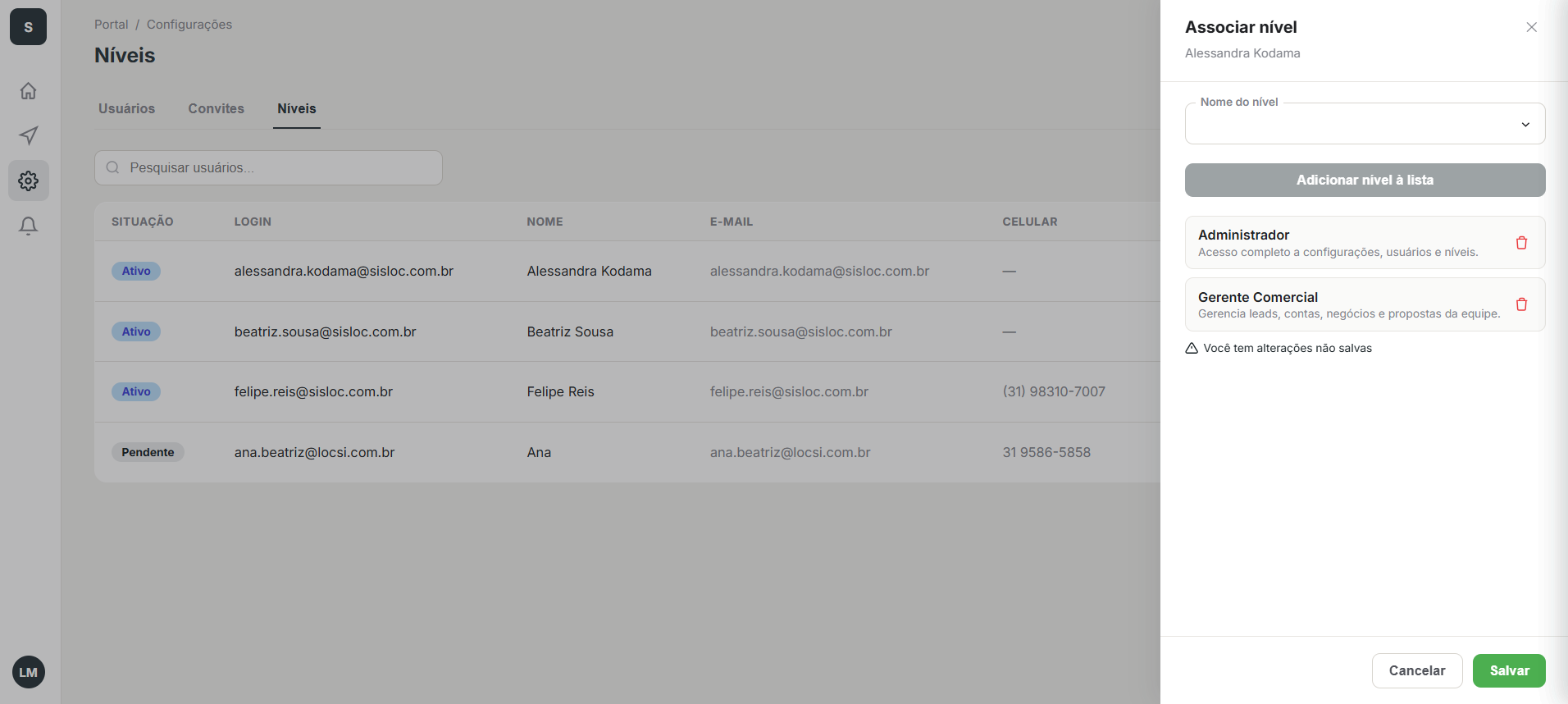
Single panelRelationships visible in the same context.
The interface structure needs to follow the structure of the problem.
Company and access began to derive from the level
The company had been associated directly with the user, but conceptually belonged to the level. The preferred company began to derive from assigned levels; those same levels determined access to products and their permissions.
With 50 permissions, tags stopped working
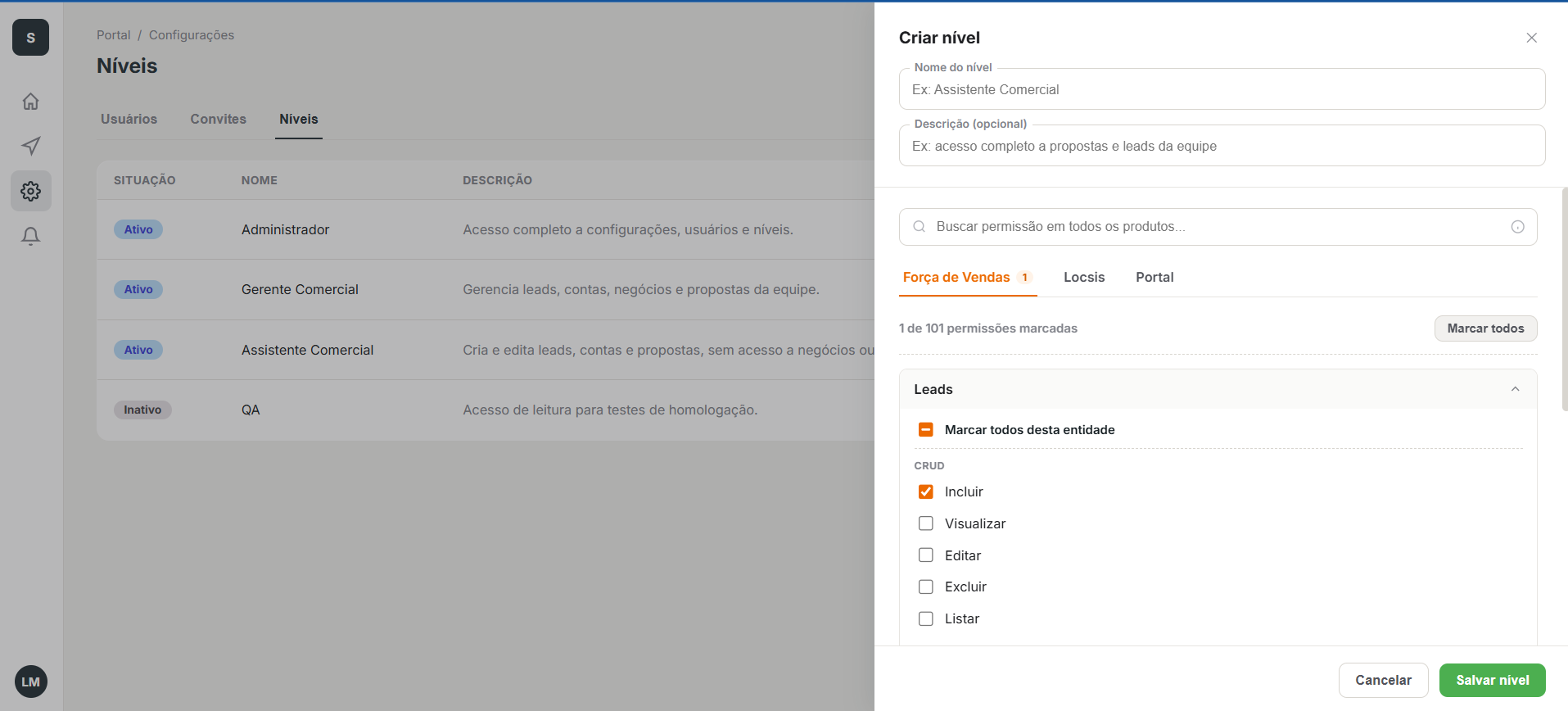
Colored tags worked with a small number of items. With dozens of permissions, they lost readability, made states harder to compare, and made selection tiring.
Stress test
Does this solution still work with 50 permissions?They worked at a small scale.
- reading becomes harder
- selection becomes tiring
- states become hard to compare
- groups lose clarity
- grouping
- search
- counters
- selection by group
- CRUD separated from specific processes
Search, grouping, counters, and group selection provided control over the volume. Standard CRUD operations remained separate from special processes that required a different operational model.
The functional prototype made the rules testable
The work moved from a static prototype to a functional experience built with:
HTMLCSSJavaScript- layout
- hierarchy
- basic flow
- state
- rules
- accumulation
- search
- behavior
- high volume
The prototype represented user creation and editing, multiple levels, accumulated permissions, companies, invitations, passwords, search, product switching, and high-volume scenarios.
When implementation issues appeared, the process included debugging and code validation. The prototype was exercised in a simulated DOM to verify behavior before it was shared.
AI accelerated experimentation
AI
- synthesis
- alternatives
- initial generation
- prototype acceleration
Design judgment
- architecture
- rules
- prioritization
- evaluation
- correction
AI supported synthesis, initial generation, exploration, prototyping, and debugging. The access model and architecture decisions came from the product rules.
Explicit relationships, testable behavior
- Fragmented journeys→Consolidated experience
- Implicit rules→Explicit relationships
- Solution for a few items→Model prepared for high volume
- Static prototype→Functional prototype
- Ambiguity→Discussable and testable behavior
The proposal consolidated fragmented journeys, made access relationships visible, and prepared the interface for high volume and exceptions. The functional prototype made it possible to discuss and test the model before implementation.
