Case study
Turning Sequential Records into a Batch Operation
Grant Management · Pris
Reducing support dependency in a complex B2B workflow
- Product Design
- User Research
- Usability Testing
- B2B SaaS
- Complex Workflows
- Maze
One operation at a time created dependency
In Pris, a B2B platform for variable compensation management, grants and batches were registered individually. In larger operations, repetition pushed configuration work toward implementation and support teams.
The problem moved to the internal team
An administrative task ended up being performed manually outside the product. The interface needed to preserve each registration rule while enabling high-volume operations.
Original process
- one grant / batch at a time↓
- more repetition↓
- more operational effort↓
- support dependency or manual operations
Research revealed where the operation broke down
I mapped the flow with Customer Success, Product, and Technology and conducted qualitative interviews with clients. Research revealed dependencies, rules, and failure points in larger operations.
Different rules remained part of the model
Companies configured programs with different rules and structures. The solution preserved that flexibility while reorganizing how the full set was operated, monitored, and corrected.
Good UX does not always mean removing complexity. Often, it means giving people better tools to control it.
Batch operations changed the logic of the flow
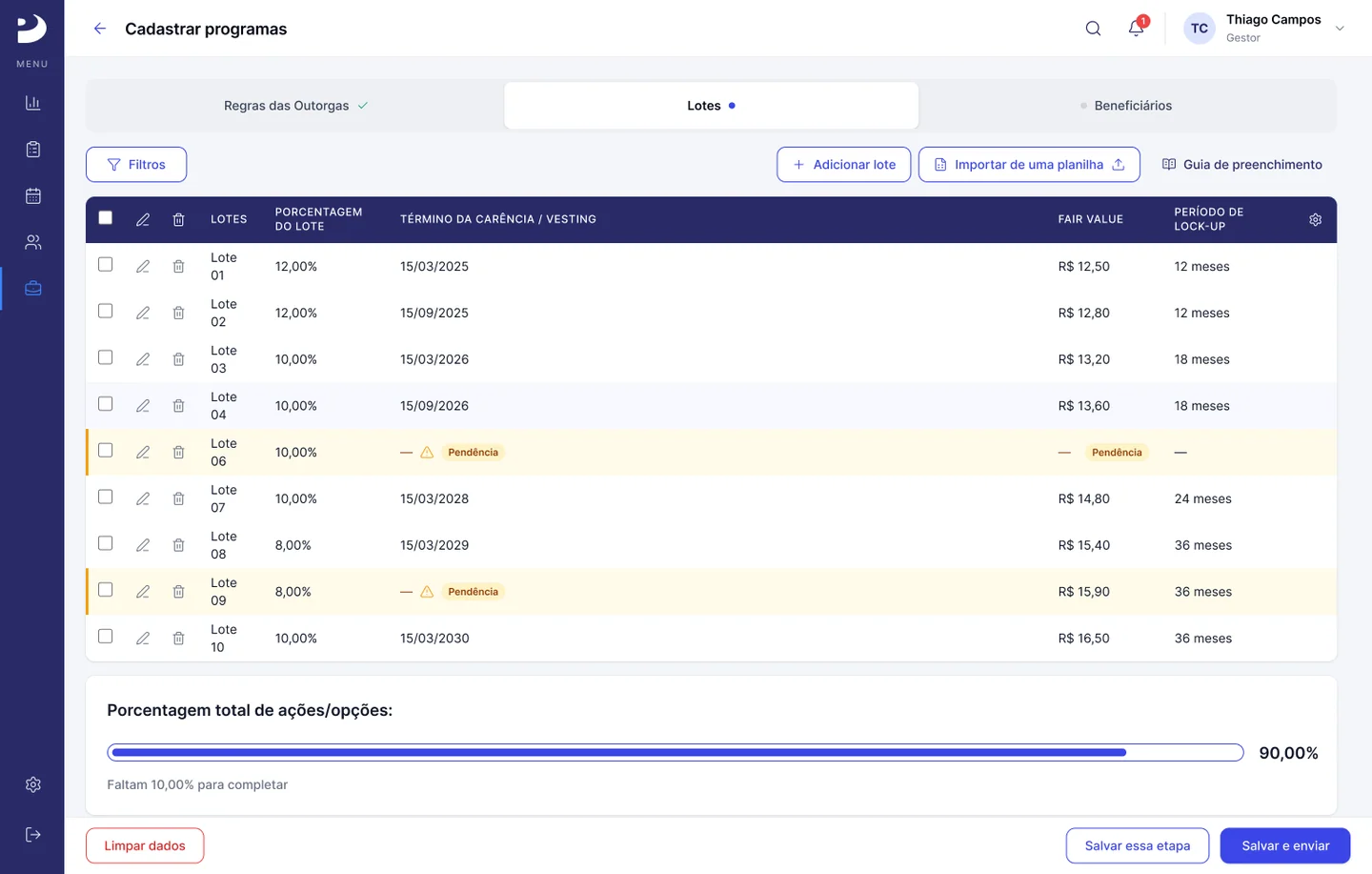
Registration was divided into stages that could be saved independently. A central entry point began to gather multiple grants, added through the interface or imported from a spreadsheet.
Repeated flow and operational dependency.
Multiple grants and batch operations.
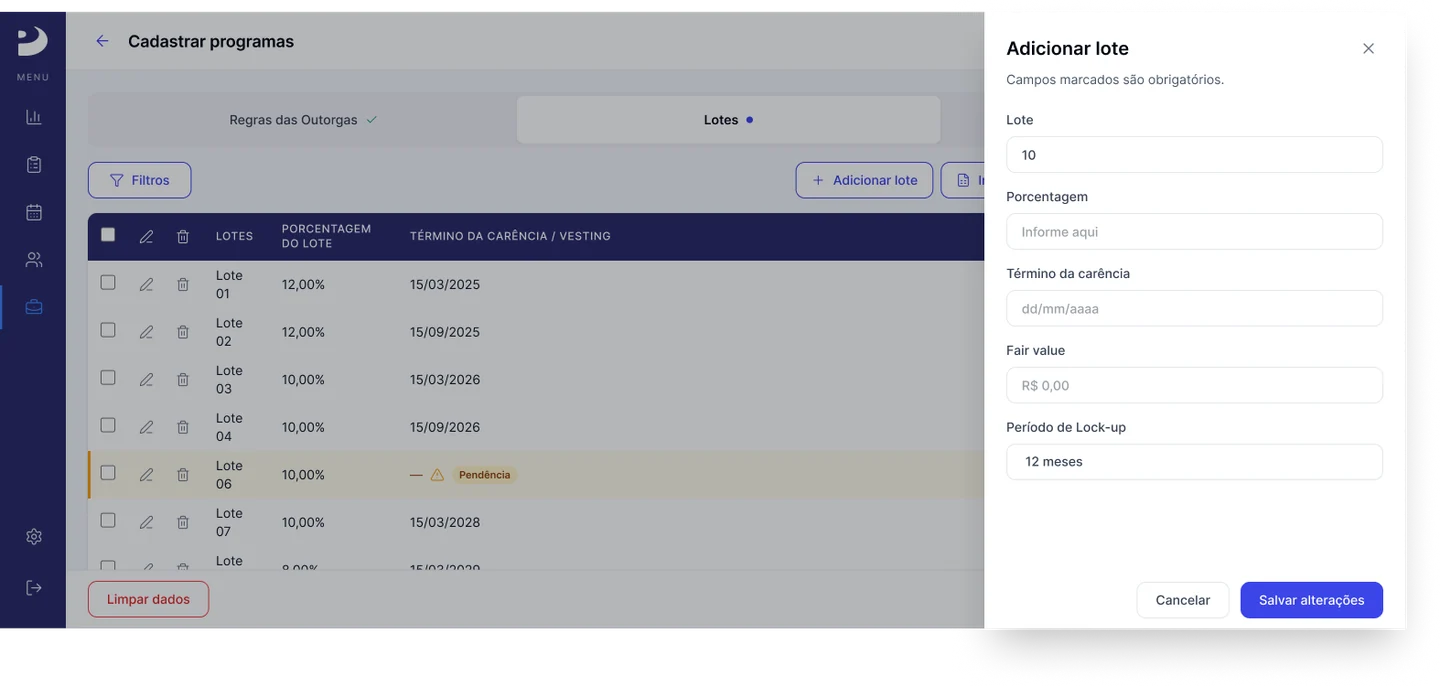
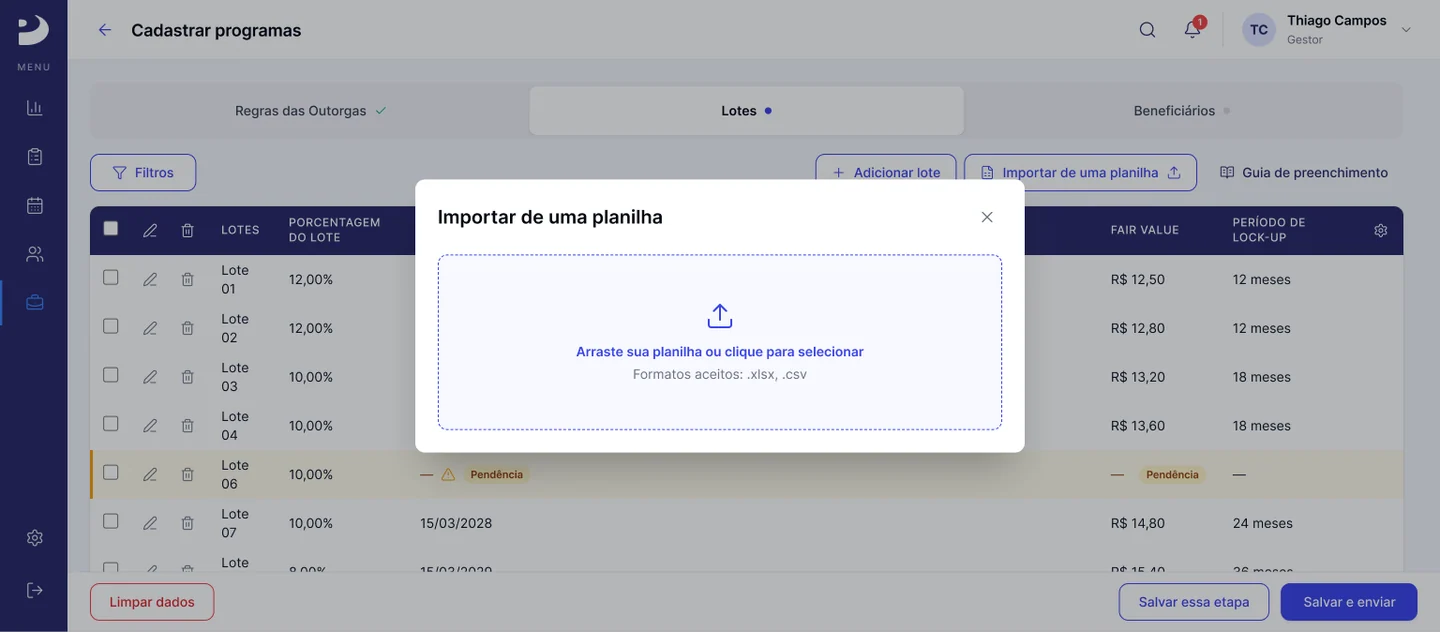
Batch operations also required an overview of the full set, per-item states, and continuity when part of the processing failed.
Recovery happened per item
A partial failure should not invalidate all previous work. The interface identified which item had failed, allowed it to be corrected, and resumed the operation without restarting the rest of the batch.
- create
- review
- complete
- error
- identify
- correct
- continue
Testing changed important details of the solution
In Maze, 14 participants tested how they found the new area, identified the current stage, and added multiple batches through the interface and spreadsheet import.
A few points needed refinement.
The overall model was understood. Testing moved fair value into “Rules” and guided adjustments to explanatory copy before implementation.
A model prepared for partial failures
- Create / import↓
- Manage multiple grants↓
- Review↓
- Correct items individually↓
- Complete
- One at a time→Multiple grants
- Fragile flow→Recovery per item
- Support / manual operation→Greater administrative autonomy
- Initial solution→Refined after testing with 14 participants
The operation moved from sequential registrations to managing multiple grants, with per-item recovery and greater autonomy inside the product.